If you’re being super honest… maybe the Bible sometimes leaves you scratching your head.
You know you’re supposed to read it. You know it’s the Word of God.
But it’s so massive and foreign. It's like a mystery—a puzzle. You just don’t get much out of it when you do sit down and read it.
We’ve all been there!
So how do you read the Bible in a way that makes sense and brings true transformation to your life?
Here are some tips and answers to the most commonly asked questions about how to read the Bible.
How to start reading the Bible?
If you’re just getting started with reading the Bible, it’s often suggested to begin with one of the four Gospels (Matthew, Mark, Luke, or John).
John in particular is often recommended as a good starting point.
The Gospels walk you through the life and work of Jesus Christ, the Cornerstone of Christianity. And there’s nothing more foundational to the Christian life than knowing Christ!
After going through one of the Gospels, Genesis would be a good book to read next, because it lays the foundation for everything across the entire Bible.
Then you could try alternating between New and Old Testament books from beginning to end so that you get a good overall picture of what Scripture is about.
Tips for reading
As you’re reading, keep in mind…
- The Bible is first and foremost a book about God and is a means to know Him. The primary purpose of reading is not to be encouraged or find answers for your life (although these are good secondary purposes) but to draw closer to your Lord and Savior.
- Each book had its original context and each author had his original purpose in writing to the original audience. So be careful not to read every verse as if it’s meant specifically for today.
Tips for studying
While simply reading the text is good, it’s also good if you can have a plan for slowing down and actually studying some portions of Scripture. The Bible study method we recommend is inductive Bible study, which follows a process of...
- Observation — pay close attention to the details of what the author is simply saying
- Interpretation — based on what you’ve carefully observed from the text, determine what the author means
- Application — think through how the meaning of the passage applies to your life in practical ways
Check out this video explaining inductive Bible study more in-depth.

How long does it take to read the Bible?
While the length of time it takes to read the Bible will vary from person to person, eighteen months is a reasonable time for most people to make it through the Bible.
Of course, you can go slower or faster depending on how quickly you read and how much time you’re able to spend on it.
Many Christians promote “read the Bible in a year” plans. Although these plans are popular and are beneficial for some people, they often end up being too rigorous for others, so don’t sweat it if “Bible in a year” doesn’t work for you.
How to read the Bible in order?
There’s not necessarily a best “order” to read the Bible. But here are a few ideas for what order you can read:
- Standard order — the order presented in most Bibles is a good order to follow when reading the Bible.
- Just remember that this standard order is not always chronological, because the compilers of this order were not primarily concerned about chronology. (Instead, they grouped the books of the Bible according to similarities in the type of literature: for example, historical books are grouped together, and prophetic books are grouped together.)
- The books of the Old Testament are basically chronological from Genesis through Esther (other than 1 and 2 Chronicles, which overlap with 1 and 2 Kings, and Ruth, which takes place sometime during the book of Judges). Starting with Job, the various books were written sometime within the context of those other historical books.
- Alternating order — it may be a good idea to go back and forth between the Old Testament and New Testament so that you can immerse yourself in a variety of scriptures as you’re reading.
- A good order to follow if you’re just getting started with reading the Bible may be to (1) begin with the Gospel of John, then (2) go to Genesis, and then (3) switch back and forth between Old Testament and New Testament books in the standard order as they're found in your Bible.
- Note that you’ll end up reading more New Testament than Old if you follow this order (since the New Testament is shorter and you’ll be alternating between testaments). But the New Testament is a bit easier to understand and apply for Christians who are newer to reading the Bible, so this isn’t necessarily an issue.
- Chronological order — it’s possible people are primarily referring to chronological order (order in which the books of Scripture take place in history) when they ask about how to read the Bible “in order.”
- It can be helpful to read the Bible in chronological order when you’re trying to understand the progression of events.
- However, chronological order is not always the best way to read the Bible—because if you go in strictly chronological order, you will break up the flow of individual books that overlap in time. This can actually cause you to lose the overall context of what the authors of the individual books were saying.
How to read the Bible in a year?
If you’re looking to read the Bible in a year, here is the plan suggested by Precept:
- Week 1: Genesis 1-24
- Week 2: Genesis 25-43
- Week 3: Genesis 44-Exodus 14
- Week 4: Exodus 15-34
- Week 5: Exodus 35-Leviticus 14
- Week 6: Leviticus 14-Numbers 4
- Week 7: Numbers 5-22
- Week 8: Numbers 23-Deuteronomy 4
- Week 9: Deuteronomy 5-27
- Week 10: Deuteronomy 28-Joshua 12
- Week 11: Joshua 13-Judges 8
- Week 12: Judges 9-21; Ruth; 1 Samuel 1-4
- Week 13: 1 Samuel 5-24
- Week 14: 1 Samuel 25-2 Samuel 15
- Week 15: 2 Samuel 16-1 Kings 7
- Week 16: 1 Kings 8-22
- Week 17: 2 Kings 1-18
- Week 18: 2 Kings 19-1 Chronicles 12
- Week 19: 1 Chronicles 13-2 Chronicles 8
- Week 20: 2 Chronicles 9-32
- Week 21: 2 Chronicles 33-36; Ezra; Nehemiah 1-8
- Week 22: Nehemiah 9-13; Esther; Job 1-10
- Week 23: Job 11-42
- Week 24: Psalms 1-38
- Week 25: Psalms 39-76
- Week 26: Psalms 77-109
- Week 27: Psalms 110-150; Proverbs 1-4
- Week 28: Proverbs 5-31
- Week 29: Ecclesiastes; Song of Solomon; Isaiah 1-9
- Week 30: Isaiah 10-35
- Week 31: Isaiah 36-57
- Week 32: Isaiah 58-66; Jeremiah 1-10
- Week 33: Jeremiah 11-30
- Week 34: Jeremiah 31-49
- Week 35: Jeremiah 50-52; Lamentations; Ezekiel 1-12
- Week 36: Ezekiel 13-31
- Week 37: Ezekiel 32-48; Daniel 1-2
- Week 38: Daniel 3-12; Hosea
- Week 39: Joel; Amos; Obadiah; Jonah; Micah; Nahum
- Week 40: Habakkuk; Zephaniah; Haggai; Zechariah; Malachi
- Week 41: Matthew
- Week 42: Mark
- Week 43: Luke
- Week 44: John 1-14
- Week 45: John 15-21
- Week 46: Acts 1-12
- Week 47: Acts 13-28
- Week 48: Romans; 1 Corinthians
- Week 49: 2 Corinthians; Galatians; Ephesians
- Week 50: Philippians; Colossians; 1 and 2 Thessalonians; 1 and 2 Timothy; Titus; Philemon
- Week 51: Hebrews; James; 1 and 2 Peter; 1 and 2 John
- Week 52: 3 John; Jude; Revelation
This plan will take you through approximately the same number of verses per week.
If possible, we would also recommend choosing some books to study more in-depth throughout the year. You can check out our video on how to study the Bible in-depth with the Precept Bible Study Method here.
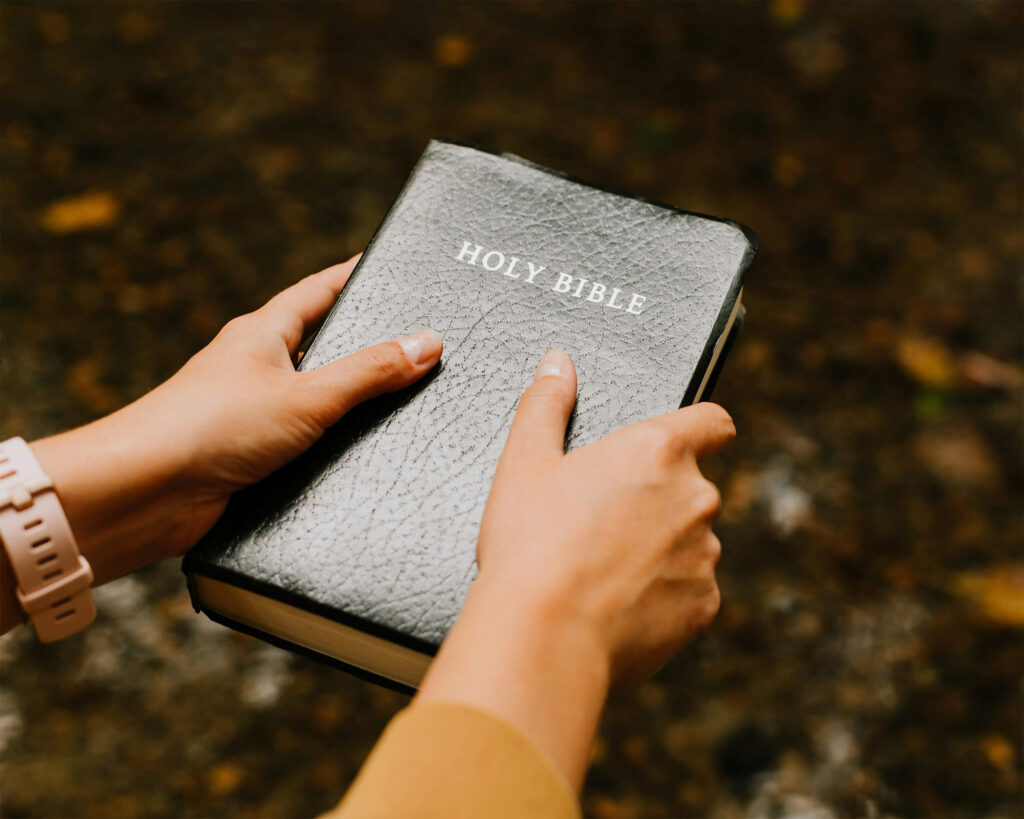
How to read the Bible for beginners
If you’re a brand-new beginner to the Bible, the thought of reading the Bible can be intimidating. Where do you even start?
Here are some basic first principles you can consider:
- Don’t worry about a specific “Bible in a year” plan or other type of Bible reading plan; just start reading the Gospel of John so you can get to know Jesus Himself.
- Read John slowly, paying close attention to all the characters, events, and details.
- As you’re reading, ask the “5 W’s and an H”: questions such as who is the passage about, what is happening, where is it taking place, when are the events occurring, why is it being recorded, and how is it happening?
- Consider what points John is trying to make as he records all of the events and teachings described in his Gospel.
- All along the way, consider what each passage is teaching about Christ, about God, and about how God wants us to think and live.
If you get started in a good habit of reading Scripture like this, you’ll experience immense spiritual growth as you get to know Jesus more and more deeply through His Word through the power of the Holy Spirit!
And as you grow, you can develop more in-depth Bible study skills that will help you go even deeper.
(Click here for our video walking you through the basics of inductive Bible study.)
How to read the Bible in chronological order
If you want to get a solid handle on the chronology of the Bible, read Genesis-Esther. Then read one of the Gospels (such as Luke), Acts, and Revelation.
Reading the whole Bible in chronological order is actually more complicated than it sounds, because many of the books of the Bible overlap in time and precise chronology is sometimes unknown.
In order to be strictly chronological, you would need to break up the books and intersperse them into each other—which loses the context of the individual books themselves and is not ideal. However, a chronological approach is sometimes helpful, since it can help you more easily see the historical context for some of the wisdom/poetry books, prophetic books, and epistles (letters).
The chronology of Genesis-Esther is mostly straightforward (aside from 1 and 2 Chronicles and Ruth), so you can read those books from beginning to end for a good chronology of the Old Testament. The books from Job-Malachi primarily take place within the context of those historical books.
The New Testament’s primary chronological events are covered in the Gospels and Acts, with the rest of the New Testament being mostly letters written during or after the events of Acts. Revelation was the last book written and describes a vision the Apostle John received on the island of Patmos, as well as the final events of the End Times!
The chronology of Jesus’ life as described in the Gospels is very complicated when trying to fit together all the events described in each Gospel. So don’t stress out too much about getting the order of those events straight.
If you want to go into the chronology of the Bible more in-depth, there are many chronological Bibles and online resources that can help walk you through the chronology of Scripture passage by passage.
How not to read the Bible?
What are some Bible reading pitfalls or dangers to avoid? In other words, how should you not read the Bible?
Here are some basic tips:
- Don’t take it out of context — if we’re not careful, we can make Scripture say almost anything we want it to say by reading it out of context. In reality, the meaning of a verse or passage is only determined based on the context in which it is given. So make sure you’re paying attention to the context and not just taking an individual verse or passage on its own.
- Don’t read yourself into Scripture — the Bible is for us but it isn’t about us. It’s about God! And it was written to real people in a real historical context. So we should take it for what it meant to the original audience before applying its principles to our own lives.
- Don’t look for “hidden meanings” — God communicates in order to be understood. The meaning of Scripture is not a cryptic code to unlock but is communicated with clarity (the fancy theological word for this is perspicuity). That is not to say that Scripture is always easy to understand or that it is always easy to put the pieces of the big picture together. But we can take Him at His Word—at face value.
- Don’t read from a modern perspective — one reason there is confusion when it comes to reading Scripture is that we come to it within the context of our own modern culture and presuppositions. We don’t always realize how much of our modern mindset we are projecting onto the Bible. We must remember that the Bible was given in a different time and to people in different cultures.
- Don’t forget to pray! — We can’t truly understand Scripture apart from the illuminating work of the Holy Spirit. He is the Giver of the Bible, and for believers in Christ, He is the indwelling Teacher who opens our eyes to the truth. So when we come to Scripture, we should always remember our dependence on God and pray for Him to help us understand.
How to read and understand the Bible?
The goal is not just to read the Bible but to understand what we’re reading so that we can apply it to our lives.
So how can we actually understand the Bible?
Here are some basic principles:
- Pray! It’s the Holy Spirit who truly helps us understand the truth.
- Read slowly and inductively—pay close attention to all the details of what’s simply being said, which will help you determine what it actually means. (For more on this, check out this video.)
- Don’t jump into determining the meaning right away. Devote a lot of time to observing the details of the text first.
- Make sure you’re taking into account the context of the whole chapter you’re, and even the whole book, rather than just taking a single verse or passage on its own.
- Don’t jump into “how does this apply to me?” right away. Be patient as you slowly absorb the text of Scripture so you can discern what it actually means.
- Think about the original author and audience (what the author was trying to communicate and what he wanted his audience to understand in their own cultural context). Don’t look for hidden meanings or interpret it through modern presuppositions.
- Think about what God (the ultimate Author) was intending to communicate about Himself, His will, and His plan.
These principles will be a good starting point to help you truly understand what you’re reading.
How to pray before reading the Bible
It’s always a good idea to pray before reading the Bible—because we can’t truly understand Scripture apart from the work of God’s Holy Spirit illuminating its truths to our hearts.
This kind of prayer could be as simple or elaborate as you’d like. You're just talking to God and asking Him to help you understand.
Here’s an example prayer you could pray:
Lord, thank You for the Word You’ve given us so that we can know who You are. Help me to understand Your Word today. Teach me its truth so that I can know and love You even more. In Jesus’ name, amen.
Reading the Bible is one of the most spiritually beneficial things you can do as a Christian…
Because as believers in Christ, our goal is to know Him—a personal knowledge that grows deeper and deeper and transforms us from the inside out.
And how has He revealed Himself so that we can know Him in this deep and personal way?
In His Word!
So the question is…
Are we reading it?
Get more in-depth tips on the basics of Bible study in our new video.